If you are lucky enough to have a cottage by the sea; then please buy Leila Hadley’s book “A Garden by the Sea”. She and her husband, Henry Luce, planned and planted lovely organic flower gardens around their summer home on Fishers Island in Long Island Sound. This informative and readable book offers guidance for garden lovers who want to plant near the sea.
Every summer I spend about two weeks a year on Fishers Island. The Hydrangea macrophylla with blue bloom clusters the size of baseballs grace every yard. Marsh mallow shrubs with pink flowers line the brackish ponds and the coastline.
My favorite shrub is the rosa rugosa with white, pink or magenta flowers. Today after kayaking friends and I picked a few rosehips as we walked up from the beach. The fleshy part of rose hips can be eaten or throw into boiling water for tea. This fruit of the rosa is tasty and an excellent source of vitamin C.
While walking along the coastline nothing is better than juicy blackberries plucked from their vines and popped into your mouth.
**********************************************************************
July brings hot humid days. Flower boxes, containers, vegetable gardens and the newly planted should be watered frequently. Even your compost may need watering. Fertilize your tomatoes. After harvesting the last raspberry cut back the smaller canes to the soil line; leaving the stronger canes for next season. Pull your weeds before they go to seed.
Sunday, July 29, 2007


Wednesday, July 4, 2007
400th America’s Anniversary Garden
In 2007, people are planting a garden to commemorate the 400th anniversary of Jamestown, the first permanent settlement in the Americas. Individuals, garden clubs, plant nurseries, parks and businesses are participating with a red, white and blue theme. From containers and hanging baskets to large gardens these anniversary designs are appearing throughout Virginia.
Enter your type of garden in the 2007 contest. The deadline is Sept 1st. For more info on contest details and planting info please visit http://www.ext.vt.edu/americasgarden . Click on the link for help with your garden design and for informative lists of appropriate plants.
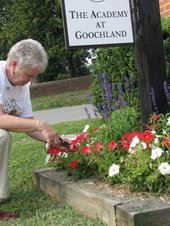
Elaine, member of the Goochland Garden Club, is deadheading blooms in one of the corridor gardens which the Garden Club planted along Rt.6 near the Goochland Court House.
White petunias and blue salvia are surrounded by red roses in The Italian Garden at Maymont Park, http://www.Maymont.org, in Richmond. The wisteria blossoms are beginning to appear. The background is framed with blooming magnolias.
Red, white and blue flowers line the walkway of the Jamestown Settlement’s visitor center and galleries. Click http://www.historyisfun.org for info, events, etc.
The first colonist realized the importance of plants and included a botanist, Johannes Fleisher, as a passenger in the first voyage to the New World in May 13, 1607. His job role was to record "exotic" plants and trees and to search for new botanical medicines.
Enter your type of garden in the 2007 contest. The deadline is Sept 1st. For more info on contest details and planting info please visit http://www.ext.vt.edu/americasgarden . Click on the link for help with your garden design and for informative lists of appropriate plants.
Elaine, member of the Goochland Garden Club, is deadheading blooms in one of the corridor gardens which the Garden Club planted along Rt.6 near the Goochland Court House.
White petunias and blue salvia are surrounded by red roses in The Italian Garden at Maymont Park, http://www.Maymont.org, in Richmond. The wisteria blossoms are beginning to appear. The background is framed with blooming magnolias.
Red, white and blue flowers line the walkway of the Jamestown Settlement’s visitor center and galleries. Click http://www.historyisfun.org for info, events, etc.
The first colonist realized the importance of plants and included a botanist, Johannes Fleisher, as a passenger in the first voyage to the New World in May 13, 1607. His job role was to record "exotic" plants and trees and to search for new botanical medicines.
Tuesday, June 12, 2007
June 2007
With the soaring temps to high 90s last week and hard rain from a tropical storm, early June reminded us that summer is upon us and that the hurricane season has begun. The summer solstice, the longest day in the Northern Hemisphere when the sun is directly overhead at noon, arrives June 21st.
Cool mornings are perfect for continuing garden preparation. Container grown shrubs can still be planted, but water frequently. Scatter seeds of forget-me-nots in damp shady places. Perennials can still be planted, but for several days must be watered and protected form the hot sun. For autumn blooms, plant dahlias, mums, and salvias. Plant tropical water lilies in ponds and in water gardens. Start Brussels sprouts transplants. If we have less than one inch of rain in a week; water your plants.
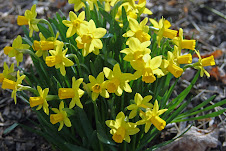
Irises and daffodils were lovely this spring. Bearded irises can be divided anytime from now until September. If large clumps of daffodils did not produce many blooms; they probably need to be divided.
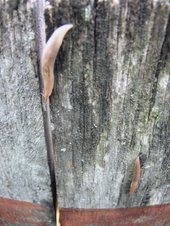
Slugs and snails are preying on your vegetables - especially my chard! Slugs and snails can be beneficial because they feed on crop pest such as caterpillars and aphids. However, in small veggie and herb gardens they will eat seedlings, roots, tubers and young plants.
For prevention remove fallen leaves and thin plants in your garden. Bricks, wood and debris on the ground are good breeding areas and should be kept away from your plants. After heavy rains, go on a slug patrol to hand pick these pests. To trap and drown slugs, bury a container in the ground in a shady part of your garden. Fill with 1 to 2 inches of beer. Cut a 2 to 3 inch hole in the lid and cap the container. Replace beer as need. Place inverted containers, melon or grapefruit peels as shelters to attract these pest. Daily gather slugs and snails from the traps and place in soapy water of rubbing alcohol to kill them. Sand, wood ashes and baked eggshell pieces at the base of your plants will deter slugs and snails.
Determine the texture and sweetness of vegetables by the time of day you harvest. Pick peas and corn late in the day for maximum sweetness. Lettuce, and other leafy veggies and cucumbers are crisper if picked early morning. Pick strawberries in early morn. Do not wash or stem the berries until ready to use and store in a covered container in the refrigerator. If harvesting herbs for essential oils; pick just before flowering on a sunny day.
During spring and early summer parents introduce their young to my bird feeder. Families of goldfinches, cardinals, and indigo buntings provide more color than T.V. I’ve enjoyed watching a woodpeckers remove the outer seed coating from the sunflower seed then place the naked seed in the months of the waiting young. A pair of blue birds laid a new egg in their former bird house to begin a second family this season.
Cool mornings are perfect for continuing garden preparation. Container grown shrubs can still be planted, but water frequently. Scatter seeds of forget-me-nots in damp shady places. Perennials can still be planted, but for several days must be watered and protected form the hot sun. For autumn blooms, plant dahlias, mums, and salvias. Plant tropical water lilies in ponds and in water gardens. Start Brussels sprouts transplants. If we have less than one inch of rain in a week; water your plants.
Irises and daffodils were lovely this spring. Bearded irises can be divided anytime from now until September. If large clumps of daffodils did not produce many blooms; they probably need to be divided.
Slugs and snails are preying on your vegetables - especially my chard! Slugs and snails can be beneficial because they feed on crop pest such as caterpillars and aphids. However, in small veggie and herb gardens they will eat seedlings, roots, tubers and young plants.
For prevention remove fallen leaves and thin plants in your garden. Bricks, wood and debris on the ground are good breeding areas and should be kept away from your plants. After heavy rains, go on a slug patrol to hand pick these pests. To trap and drown slugs, bury a container in the ground in a shady part of your garden. Fill with 1 to 2 inches of beer. Cut a 2 to 3 inch hole in the lid and cap the container. Replace beer as need. Place inverted containers, melon or grapefruit peels as shelters to attract these pest. Daily gather slugs and snails from the traps and place in soapy water of rubbing alcohol to kill them. Sand, wood ashes and baked eggshell pieces at the base of your plants will deter slugs and snails.
Determine the texture and sweetness of vegetables by the time of day you harvest. Pick peas and corn late in the day for maximum sweetness. Lettuce, and other leafy veggies and cucumbers are crisper if picked early morning. Pick strawberries in early morn. Do not wash or stem the berries until ready to use and store in a covered container in the refrigerator. If harvesting herbs for essential oils; pick just before flowering on a sunny day.
During spring and early summer parents introduce their young to my bird feeder. Families of goldfinches, cardinals, and indigo buntings provide more color than T.V. I’ve enjoyed watching a woodpeckers remove the outer seed coating from the sunflower seed then place the naked seed in the months of the waiting young. A pair of blue birds laid a new egg in their former bird house to begin a second family this season.
Monday, May 28, 2007
Memorial Day Weekend
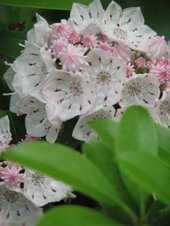
The Blue Ridge Mountains are a bloom with wildflowers (false Solomon seal, foam flower, fire pink, mayapple, wild geranium, etc.). Rhodies(Rhododendron catawbiense) are peaking; azaleas are fading; Mountain Laurels are blooming.
Friday, May 18, 2007
May 15th
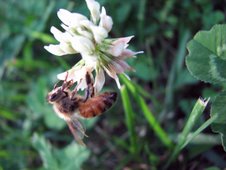
Bees have been making the headlines. Sadly, the news is not sweet. An April 23rd article in The New York Times reported on the decline of honeybees from 27 states, Europe, Guatemala and Brazil. Between September and March in the United States 26 percent of beekeepers had lost half of their bee colonies. This accounts for tens of billion of bees in our country.
Throughout the world there are instances of bees becoming disoriented and unable to find their way back to the hive. They then die of exposure. Scientists are concerned because honeybees are the major pollinators of fruits, vegetables, flowers and nuts. They are urgently studying bee genes, autopsying dead bees and chemically screening the plants that came in contact with the diseased bees.
If you missed The New York Times article you may have read in Style Weekly (Richmond, Virginia) on March 14th the article by Joe Essid, who keeps his honeybees in Goochland. While the New York Times article was scientific; his article was personal. He pleads with us to let clover grow in our yards, to stop spraying poisons, to place hives in our yards, and buy locally produced honey.
His article begins, “A queen just died. Her name is Abeegail, and we’d been worried about her and her dynasty’s health for weeks… Although this particular monarch was no more than a honeybee, her loss saddened us, as the death of bees should sadden, and frighten, us all. As goes the health of our bees, so could go a large part of our food chain.”
About two days ago at a meeting in Maryland the bee disappearance was given the name Colony Collapse Disorder (CCD). CCD only affects the European honeybee (apis mellifera). Questionnaires have been sent to beekeepers and scientists are still searching for the cause.
The same day an NPR interview reported that 1/3 of American diet, which represents 14 billion dollars a year, is dependent on pollination by the European honeybee. The report ended with the concern that bees have the same role as canaries in a coal mine, by warning us of the dangerous loss of quality in our environment.
Too soon spring will be over and summer heat and insects will be upon us. So use the cool days of May for weeding. And please protect the honeybees.
*********************************************************************
Sat. night I returned from a conference in Arkansas where I interviewed Steven Foster on his new book, “Desk Reference to Nature’s Medicine” which is published by National Geographic. I had talked with him 12 years ago when I was harvesting ginkgo leaves for an herb company. Steven, who specializes in medicinal and aromatic plants, has become world renowned as an herbalist, lecturer, international consultant and botanical photographer. His website at http://www.stevenfoster.com is full of information on herbs and his international projects.
Throughout the world there are instances of bees becoming disoriented and unable to find their way back to the hive. They then die of exposure. Scientists are concerned because honeybees are the major pollinators of fruits, vegetables, flowers and nuts. They are urgently studying bee genes, autopsying dead bees and chemically screening the plants that came in contact with the diseased bees.
If you missed The New York Times article you may have read in Style Weekly (Richmond, Virginia) on March 14th the article by Joe Essid, who keeps his honeybees in Goochland. While the New York Times article was scientific; his article was personal. He pleads with us to let clover grow in our yards, to stop spraying poisons, to place hives in our yards, and buy locally produced honey.
His article begins, “A queen just died. Her name is Abeegail, and we’d been worried about her and her dynasty’s health for weeks… Although this particular monarch was no more than a honeybee, her loss saddened us, as the death of bees should sadden, and frighten, us all. As goes the health of our bees, so could go a large part of our food chain.”
About two days ago at a meeting in Maryland the bee disappearance was given the name Colony Collapse Disorder (CCD). CCD only affects the European honeybee (apis mellifera). Questionnaires have been sent to beekeepers and scientists are still searching for the cause.
The same day an NPR interview reported that 1/3 of American diet, which represents 14 billion dollars a year, is dependent on pollination by the European honeybee. The report ended with the concern that bees have the same role as canaries in a coal mine, by warning us of the dangerous loss of quality in our environment.
Too soon spring will be over and summer heat and insects will be upon us. So use the cool days of May for weeding. And please protect the honeybees.
*********************************************************************
Sat. night I returned from a conference in Arkansas where I interviewed Steven Foster on his new book, “Desk Reference to Nature’s Medicine” which is published by National Geographic. I had talked with him 12 years ago when I was harvesting ginkgo leaves for an herb company. Steven, who specializes in medicinal and aromatic plants, has become world renowned as an herbalist, lecturer, international consultant and botanical photographer. His website at http://www.stevenfoster.com is full of information on herbs and his international projects.
Tuesday, April 24, 2007
Zone 7 Gardening
April 2007
April is a good time to divide and plant your fall potted chrysanthemums, which hopefully spent the winter in a protected location. Pinch off the tops down to 6 inches. Pinch every month to keep the plants at this height until late July.
For a constant supply of cut flowers, plant your favorites at about 2 week intervals until mid July.
April 26th is John James Audubon’s birthday. In celebration pull out and clean your hummingbird feeders. Also the hummingbirds will appreciate the planting of red or orange flowers, such as beebalm(Monarda).
Since I replaced one of my gutters last fall and never disposed of the old one; I plan to attach the old gutter to an outside porch railing. Then I will add soil, seeds and small plants to the gutter. This will let me grow small flowers and vegetables out of reach (hopefully) of deer, groundhogs, and rabbits. If I’m real ambitious; I will install a cheap drip irrigation system along the inside of the gutter. I’m dreaming of impatiens, begonias and pansies this summer which won’t be gobbled up.
***********************************************************************************
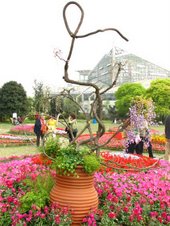
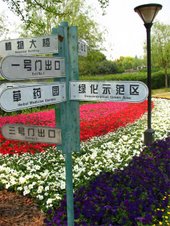
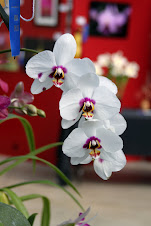
Sat. night I returned from a 2 week trip in Shanghai, China. While there I visited the Shanghai Botanical Gardens which was packed with visiting Chinese school groups and Asian tourists. The 200 acres include enormous green houses displaying tropical and succulent plant environments. The Garden had many outdoor areas. I visited the grove of different species of magnolia trees, a section with masses of blooming Azaleas planted along a creek, a collection of blooming peonies, and a pensive medicinal garden. There were ponds and a river. Other sections featured roses, bamboo, maples, camillias, and osmanthus. Their collection of orchids is considered the best in China. There is a Bonsai Garden with 100s of bonsai. I needed days to view the entire Botanical Garden.
But the next day I traveled to the town of Suzhou, which is often called the “Garden City” of China. This ancient city was built 2,500 years ago and is famous for its classical gardens and is considered one of the earliest birthplaces of Bonsai art. Of the sixty gardens several are listed as a UNESCO World Heritage site. One of these which I visited the Humble Adminstrator’s Garden is the largest at 12.85 acres and considered one of China’s four most famous gardens.
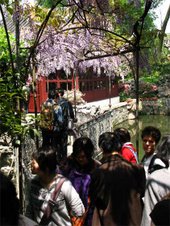
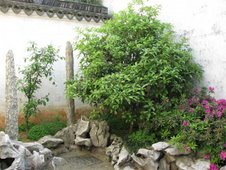
Chinese garden landscapes consider rocks and water as important as the plants. The gardens interact with the wandering rooms of the home. Windows are placed to frame a view of an organic weird rock, a graceful tree, or blooming flower. Even in a small garden, such as The Master of the Nets Garden, the inner garden of 660 square feet contains a pond surrounded by a covered walkway, a small bridge, and pavilions and is decorated with trees, flowers and rocks. I saw a blooming wisteria which flowed over the roof and was supported by its ancient 2 foot in diameter mangled and twisted trunk.
April is a good time to divide and plant your fall potted chrysanthemums, which hopefully spent the winter in a protected location. Pinch off the tops down to 6 inches. Pinch every month to keep the plants at this height until late July.
For a constant supply of cut flowers, plant your favorites at about 2 week intervals until mid July.
April 26th is John James Audubon’s birthday. In celebration pull out and clean your hummingbird feeders. Also the hummingbirds will appreciate the planting of red or orange flowers, such as beebalm(Monarda).
Since I replaced one of my gutters last fall and never disposed of the old one; I plan to attach the old gutter to an outside porch railing. Then I will add soil, seeds and small plants to the gutter. This will let me grow small flowers and vegetables out of reach (hopefully) of deer, groundhogs, and rabbits. If I’m real ambitious; I will install a cheap drip irrigation system along the inside of the gutter. I’m dreaming of impatiens, begonias and pansies this summer which won’t be gobbled up.
***********************************************************************************
Sat. night I returned from a 2 week trip in Shanghai, China. While there I visited the Shanghai Botanical Gardens which was packed with visiting Chinese school groups and Asian tourists. The 200 acres include enormous green houses displaying tropical and succulent plant environments. The Garden had many outdoor areas. I visited the grove of different species of magnolia trees, a section with masses of blooming Azaleas planted along a creek, a collection of blooming peonies, and a pensive medicinal garden. There were ponds and a river. Other sections featured roses, bamboo, maples, camillias, and osmanthus. Their collection of orchids is considered the best in China. There is a Bonsai Garden with 100s of bonsai. I needed days to view the entire Botanical Garden.
But the next day I traveled to the town of Suzhou, which is often called the “Garden City” of China. This ancient city was built 2,500 years ago and is famous for its classical gardens and is considered one of the earliest birthplaces of Bonsai art. Of the sixty gardens several are listed as a UNESCO World Heritage site. One of these which I visited the Humble Adminstrator’s Garden is the largest at 12.85 acres and considered one of China’s four most famous gardens.
Chinese garden landscapes consider rocks and water as important as the plants. The gardens interact with the wandering rooms of the home. Windows are placed to frame a view of an organic weird rock, a graceful tree, or blooming flower. Even in a small garden, such as The Master of the Nets Garden, the inner garden of 660 square feet contains a pond surrounded by a covered walkway, a small bridge, and pavilions and is decorated with trees, flowers and rocks. I saw a blooming wisteria which flowed over the roof and was supported by its ancient 2 foot in diameter mangled and twisted trunk.
Thursday, March 29, 2007
Zone 7 gardening
March 2007 gardening notes:
About 4 weeks before the last frost is the time to plant dormant roses and bare-root shrubs. Dogwoods and magnolias should only be planted in the spring.
A young tree will develop a stronger trunk if the tree is not tightly staked, but allowed to sway with the wind.
To quicken the decay of tree stumps cover the stump with soil. Tree stumps may be used as an attractive base for flower pots. Or plant flowers in the rotten areas.
This is a good time to repot houseplants into larger containers. Leggy plants should be cut back. Root your cuttings to grow additional plants. The secret to rooting coleus and wax begonias is to cut the top 6 inches of a leafy stem below a leaf node. Then remove the leaves from the bottom 3 inches and place the cutting in water adding a few drops of bleach. Place in a partially sunny window. Place in soil after roots have developed.
Perennials such as hostas, liriope, daylilies, Shasta daisies, astilbe, and coral bells can be divided before new growth starts. Plant the extras in containers for gifts.
Fertilize lilies, clematis, lilacs and bearded iris with bone meal or 5-10-5 plus lime. Also fertilize pansies and houseplants. Do not begin fertilizing peonies until after they have been planted for 2 to 3 years. A great all around fertilizer is liquid seaweed.
Vegetables that can be planted before the last frost are lettuce, cabbage, broccoli and Brussels sprouts. Also plant seeds of carrots, beets, radishes, and parsnips. Plant onions, potatoes, peas, radishes, asparagus, and turnips near the end of the month. Seedlings started inside will appreciate fertilizing at half strength every two weeks.
Add mulch to asparagus, artichokes, bramble fruits and fruit trees. Don’t remove mulch from your other plants. The ides of March can bring surprises such as our 80o week followed by two frosts.
For two nights an opossum has met me at my door. The pests are appearing. If you use wire fencing around your vegetable garden; let the wire have some slack between posts. This makes it more difficult for groundhogs to climb your fence. However, I found out that opossums are not a pest, but eat insects, such as cockroaches, crickets, and beetles. They catch and eat rats, mice, and they consume dead animals. They like over-ripe fruit, berries, and grapes. They think snails and slugs are scrumptious! Opossums are North America's only marsupial; since they carry their young in their pouch. To learn more for $25 a year you can join the National Opossum Society (www.opossum.org).
About 4 weeks before the last frost is the time to plant dormant roses and bare-root shrubs. Dogwoods and magnolias should only be planted in the spring.
A young tree will develop a stronger trunk if the tree is not tightly staked, but allowed to sway with the wind.
To quicken the decay of tree stumps cover the stump with soil. Tree stumps may be used as an attractive base for flower pots. Or plant flowers in the rotten areas.
This is a good time to repot houseplants into larger containers. Leggy plants should be cut back. Root your cuttings to grow additional plants. The secret to rooting coleus and wax begonias is to cut the top 6 inches of a leafy stem below a leaf node. Then remove the leaves from the bottom 3 inches and place the cutting in water adding a few drops of bleach. Place in a partially sunny window. Place in soil after roots have developed.
Perennials such as hostas, liriope, daylilies, Shasta daisies, astilbe, and coral bells can be divided before new growth starts. Plant the extras in containers for gifts.
Fertilize lilies, clematis, lilacs and bearded iris with bone meal or 5-10-5 plus lime. Also fertilize pansies and houseplants. Do not begin fertilizing peonies until after they have been planted for 2 to 3 years. A great all around fertilizer is liquid seaweed.
Vegetables that can be planted before the last frost are lettuce, cabbage, broccoli and Brussels sprouts. Also plant seeds of carrots, beets, radishes, and parsnips. Plant onions, potatoes, peas, radishes, asparagus, and turnips near the end of the month. Seedlings started inside will appreciate fertilizing at half strength every two weeks.
Add mulch to asparagus, artichokes, bramble fruits and fruit trees. Don’t remove mulch from your other plants. The ides of March can bring surprises such as our 80o week followed by two frosts.
For two nights an opossum has met me at my door. The pests are appearing. If you use wire fencing around your vegetable garden; let the wire have some slack between posts. This makes it more difficult for groundhogs to climb your fence. However, I found out that opossums are not a pest, but eat insects, such as cockroaches, crickets, and beetles. They catch and eat rats, mice, and they consume dead animals. They like over-ripe fruit, berries, and grapes. They think snails and slugs are scrumptious! Opossums are North America's only marsupial; since they carry their young in their pouch. To learn more for $25 a year you can join the National Opossum Society (www.opossum.org).
Subscribe to:
Posts (Atom)


 Posts
Posts




LP_gardening_2666.jpg)
LP_gardening_2668.jpg)

LP_garden_2819.jpg)

LP_flower_0563.jpg)
LP_flower_0577.jpg)
LP_flower_0545.jpg)
LP_flower_0555.jpg)
LP_flower_0539.jpg)
LP_dog_0470.jpg)
LP_snow_0467.jpg)
LP_dog_0349.jpg)
LP_tree_8153.jpg)
LP_5028.jpg)
LP_flowers_3940.jpg)

LP-grass_0889.jpg)
LP_redfox_1651.jpg)
LP_squirrel_6978.jpg)
LP_flower_6936.jpg)
LP_squirrel_6864.jpg)
LP-deer_4773.jpg)
LP_4521.jpg)
LP_1251.jpg)
LP_4585.jpg)
LP_3784.jpg)
LP_3759.jpg)
LP_3811.jpg)
LP_3816.jpg)
LP_3847.jpg)
LP_0870.jpg)
LP_4183.jpg)
LP_0891.jpg)
LP_3175.jpg)
LP_3577.jpg)

LP_3068.jpg)
LP_3058.jpg)
LP_3562.jpg)
LP_0118.jpg)
LP_3407.jpg)
LP_3150.jpg)
LP_3011+(2).jpg)
LP_3020.jpg)
LP_2830.jpg)
LP_2782.jpg)
LP_2828.jpg)
LP_1746.jpg)
LP_2648.jpg)
LP_2666.jpg)
LP_2668.jpg)
LP_2493.jpg)
LP_2611crop.jpg)
LP_2588.jpg)




LP_2126.jpg)
LP_2122.jpg)